

Leaderboard



Popular Content
Showing content with the highest reputation on 08/10/2026 in all areas
-
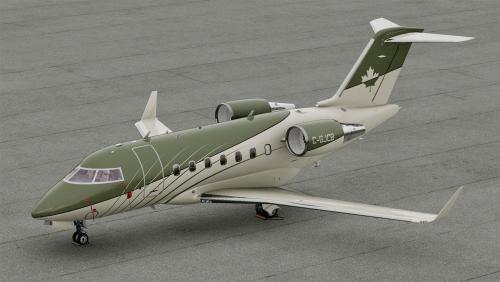
Version 1.0.0
252 downloads
This is a livery for the Hot Start Challenger 650. To install, extract the zip file into the "liveries" folder. You can supply your own registration, C-GJCB is not printed on the cowlings. If you enjoy my work, consider supporting me on Patreon to cover some of the horrendous Adobe-costs ;). You can find 8K versions of the liveries there.1 point -
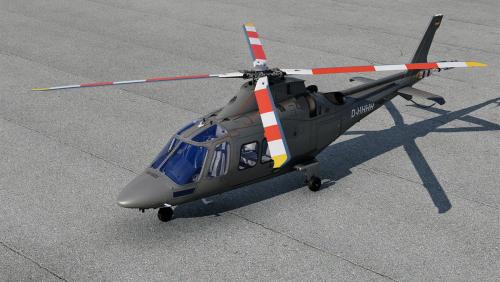
Version 1.0.0
34 downloads
This is a livery for the X-Trident AW109, inspired by D-HHHH. To install, extract the zip file into the "liveries" folder. This livery is in 4K. If you enjoy my work, consider supporting me on Patreon to cover some of the horrendous Adobe-costs ;).1 point -
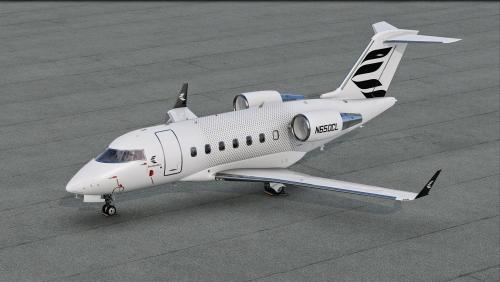
Version 1.0.0
379 downloads
This is a livery for the Hot Start Challenger 650, inspired by the house livery displayed on Bombardier's website right now. To install, extract the zip file into the "liveries" folder. You can supply your own registration, N650CL is not printed on the cowlings. If you enjoy my work, consider supporting me on Patreon to cover some of the horrendous Adobe-costs ;).1 point -
Depend on the operator and what they have available. Many operators use a flight planning service that also contracts with a performance engineering service provider. For the business aviation fleet, that is usually Aircraft Performance Group: Aircraft Performance Group: APG (flyapg.com) APG provides the airline-style airport runway analysis. If you're familiar with TOPCAT (FlightSimSoft.com), it is the same thing. You would simply run a landing analysis report for the airport of intended use and then see if the maximum landing weight meets your requirements. In the US, for part 135 or 91K operators, their minimum field length is normally based on actual landing distance allowing the aircraft to stop within 60% of the runway's declared landing distance available. This minimum field length is increased by 15% if the runway is forecast to be slippery or wet at the ETA. Some operators can reduce the runway required to where the actual landing distance will bring the aircraft to a stop within 80% of runway's LDA. With EASA, they do not permit this type of reduction...yet. Last I heard, they are looking at it. On the QRH for the CL650, for different pressure altitudes there is a chart that provide the "LFL" or Landing Field Length both for a dry runway and a wet runway for each weight at a given pressure altitude. Since LFL "assumes" standard temperature, there are no corrections provided for temperature. The chart for a given pressure altitude also give the actual landing distance (ALD) at various landing weights and temperatures. These QRH chars can be used if you do not have access to an airport runway analysis service. One more thing to consider is the landing climb requirement and approach climb requirement. Landing climb requires a minimum 3.4% climb gradient, 8 seconds after go around thrust is selected, with the aircraft in the full landing configuration. Most turbojets, this requirement is not limiting. The other requirement is the approach climb requirement, which requires a 2.1% climb gradient at maximum go around thrust with one engine inoperative, in the approach configuration for a go-around, and with the landing gear retracted. This a "spot" or snapshot performance requirement at the start of the OEI go around. On the QRH charts, I noticed that ALD data is not provided above certain temperatures at certain higher pressure altitudes. Most likely reason is that the aircraft does not meet the approach climb requirement at those pressure altitudes and temperatures. A closer look at the performance charts in the AFM would likely confirm. If you would like a good primer on transport airplane performance, may I refer you to the NBAA website that host the FAA TAPP WG performance videos: Aircraft Climb Performance Videos | NBAA - National Business Aviation Association They're also available on YouTube from the FAA. Here's the first of four: Thanks, Rich Boll1 point
-
There is still ongoing work happening behind the scenes on this product. It runs fine in the latest X-Plane version, and we keep up with monitoring that.-1 points