
Litjan
-
Posts
5,720 -
Joined
-
Last visited
-
Days Won
424
Content Type
Profiles
Forums
Latest X-Plane & Community News
Events
Downloads
Store
Everything posted by Litjan
-
Hi Cassio, The update will be applicable and work for all XP11.30+ users - and with some caveats to all other users at well: It must be noted (and we will make everyone aware at the time of download) that it is tuned for the "new experimental flight model". This means that if you run an X-Plane version that does not have this flight model option (which will become the norm in the future), your IXEG 737 will still work and fly - but the performance will be off (a bit). To make our 737 work well with the new flightmodel required tuning of the aerodynamic model in planemaker and airfoil maker, and it is not possible to switch those modifications on and off in the code like we did for our "scripted" flightmodel adjustments. So for the XP10 and pre XP11.3x fliers out there: The 737 will still work as before - you can either not apply the patch or you can live with the slight discrepancy in the flight model. I really don´t see a reason to not upgrade your XP11 version to the latest, though (you can still run OpenGL mode in 11.5x+!). In general it is obvious that we would like to have continuous support for all three versions (XP10, XP11.0x and XP11.3x+), but eventually the complexity of this is getting too big. Just like X--Plane itself our product is evolving and following progress...which means that older versions may become obsolete after a few years. I know that some people can´t afford to upgrade to newer hardware that supports XP11 or have built elaborate home cockpits that run XP10, only - but I don´t think it is fair to the vast majority of users that stay in tune with the development of technology and X-Plane to forego an evolving product to cater to this small (yet sometimes very vocal!) minority. Cheers, Jan
-

What should I expect flying IXEG in 11.41?
Litjan replied to Sweet19blue's topic in General Discussion
It is the former (equivalent amount of time). The FMS is getting more of a full rework as opposed to just adding a few items to patch it up - this will entail a full shakedown testing and therefore require a bit of time (work is underway on that). This isn´t necessarily dependent on XP12 - if that was never to come out, we would still do this FMS update. We know that XP12 will come out sometime. I don´t think it will take "years" until we see it. It will probably bring new features and requirements that will make us want to adopt our aircraft to it. So it is an apt milestone for us to aim at for the next big update. Cheers, Jan -
You can "tweak" your response curve accordingly - basically drag it all the way down to "0" around the middle point - that way a slight deflection will yield no response -> null zone. Cheers, Jan
-
Buon giorno, there could be many reasons for that - I suggest reading/watching/following along the tutorials I made for this aircraft, all found in the "Documentation" folder of your IXEG 737 installation! Ciao, Jan
-
You may also want to look at the tutorials I have done for this aircraft - they are included with your installation (look in the folder Documentation). They are both in written format and include a link to youtube tutorials as well. Cheers, Jan
-
[DISCUSSION] Use of A/T in ARM during manual flight
Litjan replied to Alpha Floor's topic in Flight Procedures and Techniques
That is correct - Airbus recommends to keep autothrust on (they know the pilots they train )... Airbus´ flight-law augmentation will compensate the pitch moment from the engines for you, so this does not pose the same problem that Boeing has. Cheers, Jan -
Hi Doeke, 1.) Not sure - if you just got this aircraft, you should already have the latest version. 2.) I don´t have enough information on what you did (or more importantly what you didn´t do!). Are you sure the GS was armed (APP mode)? 3.) Oil pressure and quantity have no real effect in X-Plane - but I haven´t seen them being low, I think. So maybe you can include a screenshot of what you see so I can tell you if it is normal or not? 4.) Yes, unfortunately our VNAV code still has some problems with altitude restrictions during the descent. We are working on fixing that - for now use the FL CHG or V/S mode to descend te aircraft in time to make the restrictions. Cheers, Jan
-
[DISCUSSION] Use of A/T in ARM during manual flight
Litjan replied to Alpha Floor's topic in Flight Procedures and Techniques
Hi Jaime, can´t resist a good discussion like this ;-) You summed up the operation of the different modes nicely. I would just like to clarify the function of the ARMED autothrottle mode. In this mode the autothrottle will "wake up" whenever it is triggered by any of these events: autothrottle reversion (low speed, placard) TOGA mode activation (take off, go around) automatic activation (MCP SPD, RETARD) in case of pitch channel mode change while in autopilot or flight-director flight OR triggered by yadar altimeter during approach at 27ft RA if in MCP SPD. The last point is the one that offers reason for different views. It was originally implemented as a safety feature. The logic is that it would be dangerous if the pilot forgets to add or reduce thrust when the pitch channel changes (i.e. the plane levels off -> gets too fast). So Boeing thought it would be good if the "current speed" is maintained automatically. The downside to this good idea is that when you are flying manually WITH flight-director (the majority of airline pilots in many parts of the world can not fly without it anymore), this MCP SPD mode will engage again and again. First when ALT ACQ engages, then again when ALT HOLD engages, then again when you command a vertical speed, and so on. While this is a nuisance (you have to command "deselect MCP SPD" to the pilot monitoring all the time), it has also caused confusion. Many pilots did not understand this behaviour and have gotten in trouble controlling the aircraft manually while the autothrottle commands thrust (pitching moment!). The danger here is that the autothrottle reduces thrust on level off (to maintain speed) and the pilot does not notice - the nose will sink! Now the pilot pulls back to climb back to the assigned altitude and the autothrottle will increase thrust to maintain the speed in the climb - now the nose rises too much! Try to fly the IXEG with autothrottle commanding speed for you - it is not that easy! So Boeing had to act and recommends now to totally disengage the autothrottle when in manual flight (with flight director). Of course it is more dangerous to fly without the autothrottle in ARM (one less safeguard against speed mishaps), but the above behaviour is also dangerous and they probably had to weigh what is more likely to cause a crash. Two more remarks: 1.) You NEVER set the MCP ALT for the MDA for a non-prec approach (if flying according to real procedures). It will be set to the missed approach altitude. Setting it to MDA is dangerous, because you could forget and then the autopilot will try to level off! ESPECIALLY with the autothrottle in OFF this is a recipe for disaster. 2.) The autothrottle is supposed to provide gust protection on approach. That is why you don´t set any wind-correction speeds while doing an automatic landing. The autothrottle is supposed to handle that. I personally think that this is a lie (from what I saw during the automatic approaches I did in the real aircraft), but the reasoning here is probably that a.) on a low-vis approach (with it´s associated wind limits!) the wind isn´t strong and b.) even if the speed decays by 10 kts before the A/T covers it - its not going to kill you ;-) So in conclusion: If you fly manually, fly with the autothrust not commanding speed. It is ok to have it command N1, of course. I personally would recommend having it in ARM during the approach at least (where you are likely to encounter a low-speed situation). Setting go-around thrust manually while at the same time flying the aircraft manually (you have no second pilot to do it for you in X-Plane) is at least very challenging. You want to hit the correct N1 value fairly quick to stay within the certified performance for the go-around. It works well to have it in ARM during fully manual (no flight-director) flight as well. It won´t engage during level-off or other pitch-channel changes (since the pitch channel of the FCC isn´t even working). Having it in ARM will provide the benefits of it´s protection, though. If you fly manually with flight-directors...go with the Boeing way, I guess. Cheers, Jan -
Landing Lights Too Dim, How to Brighten Them Up?
Litjan replied to Alpha Floor's topic in Bug Reports
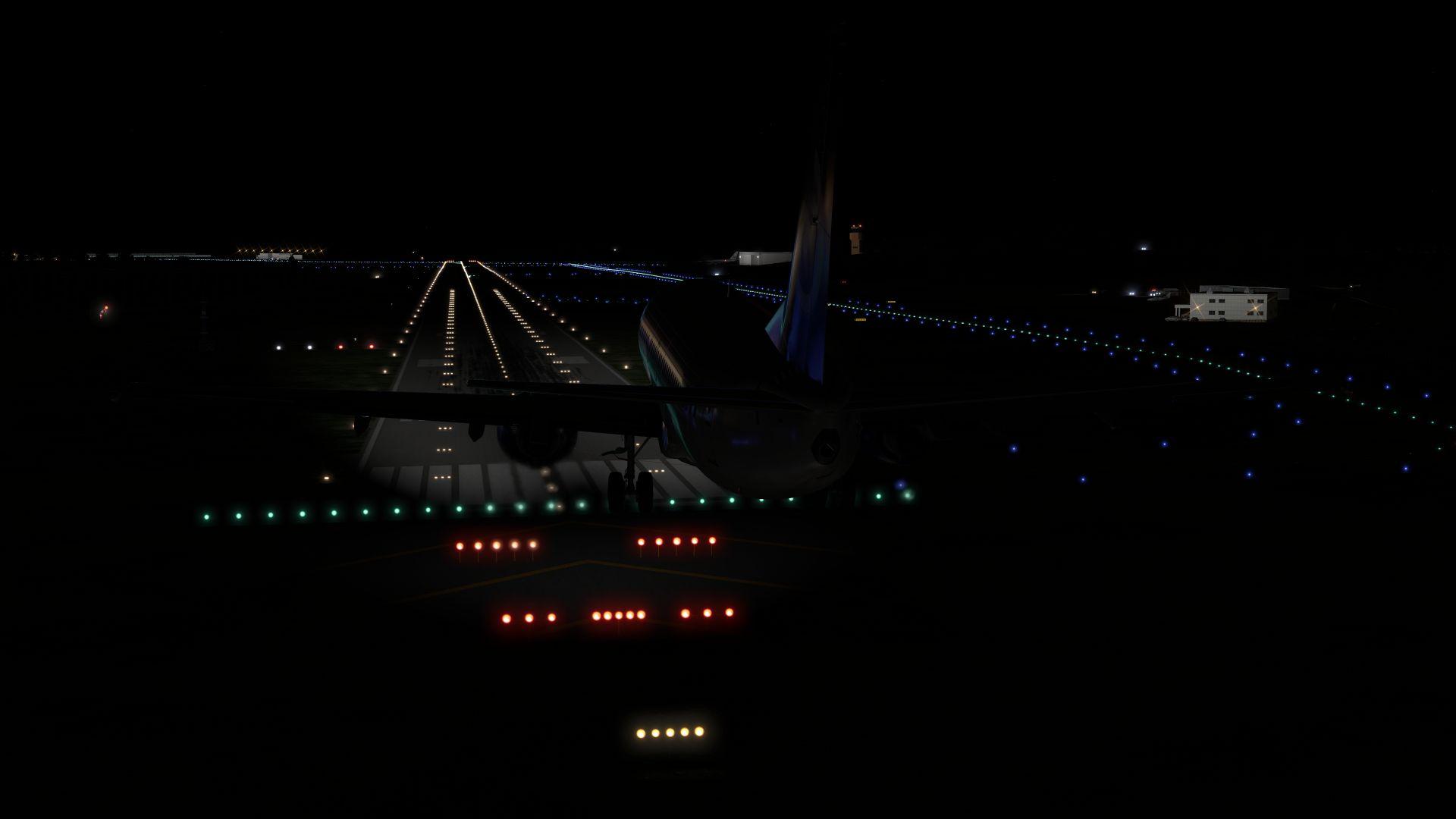
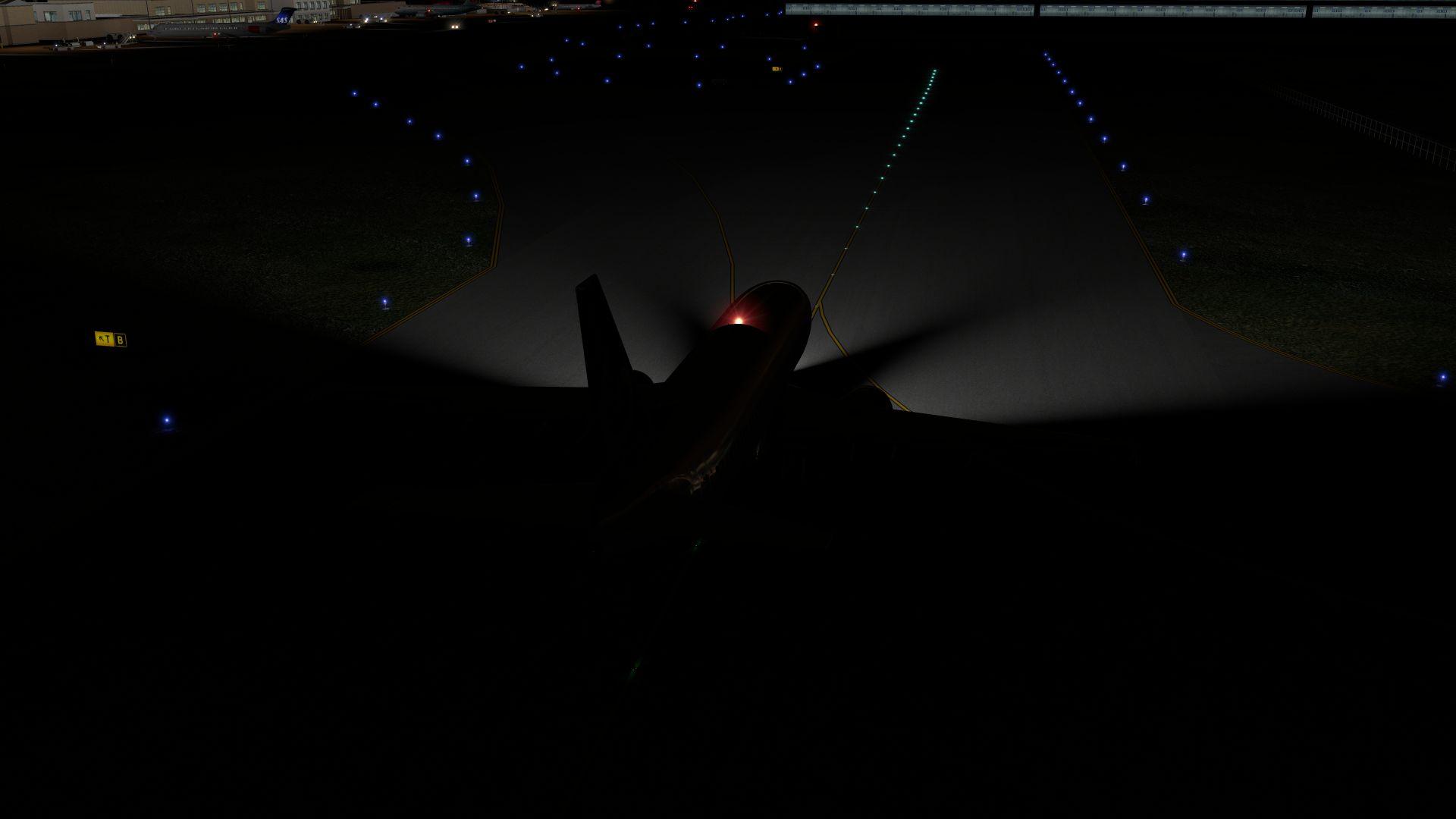
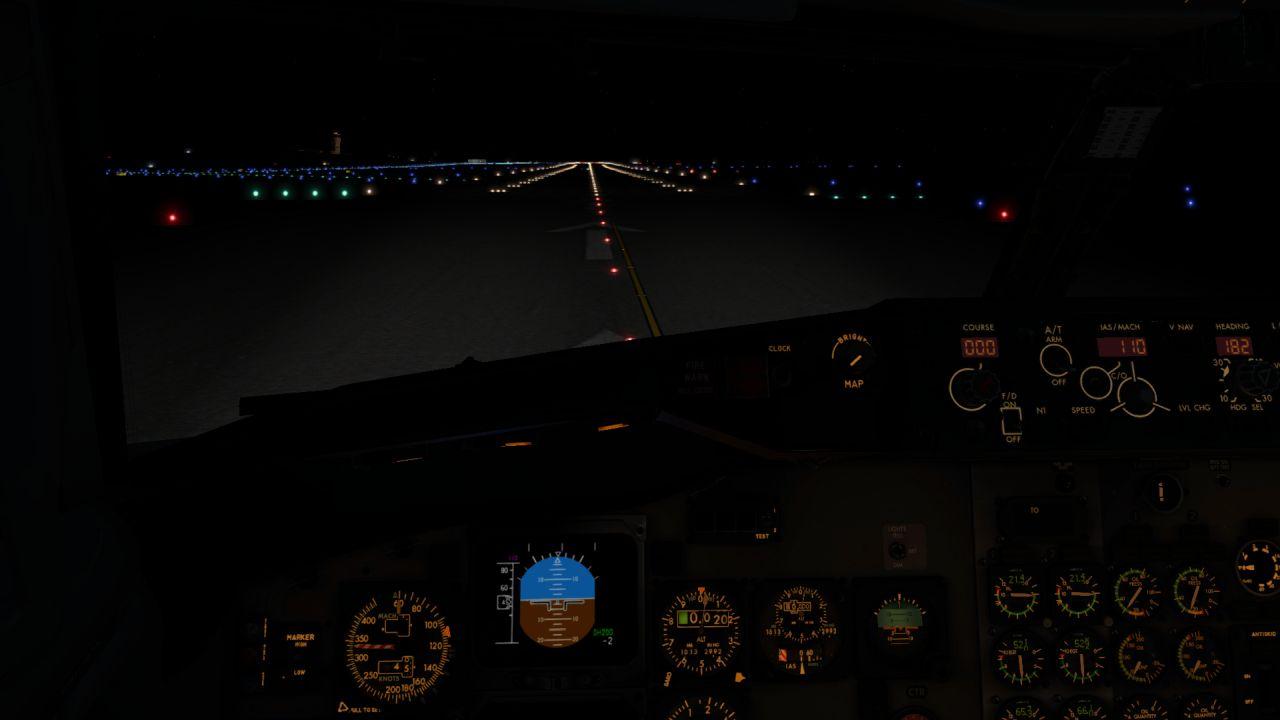
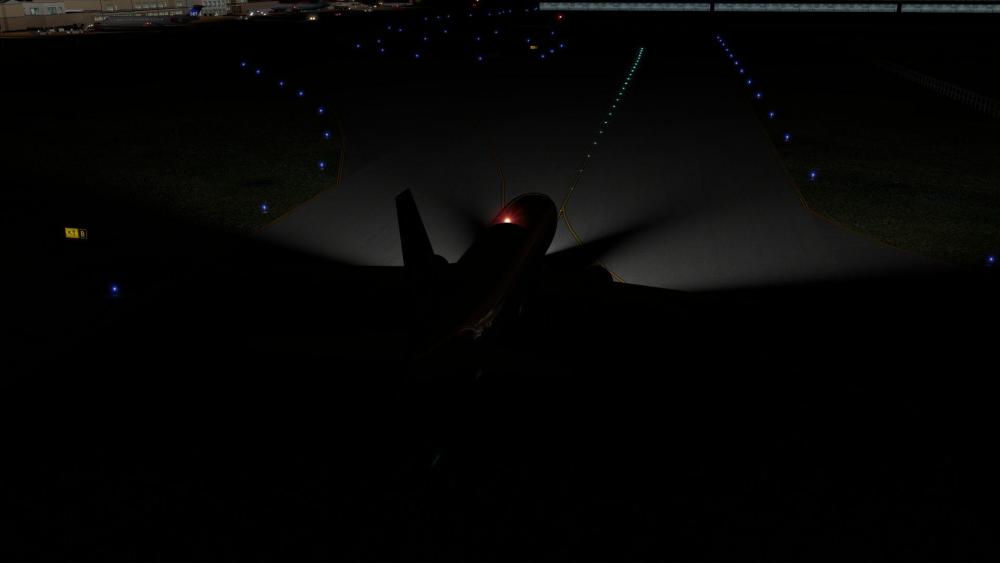
...and have adjusted the lights up for the next version.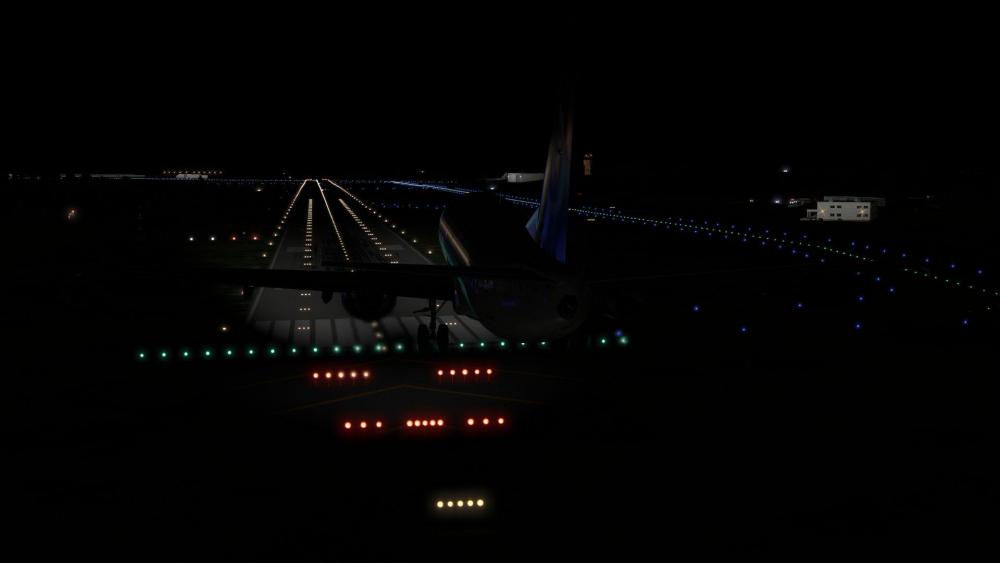
-
Landing Lights Too Dim, How to Brighten Them Up?
Litjan replied to Alpha Floor's topic in Bug Reports
I will give it some thought!! Cheers, Jan -
Landing Lights Too Dim, How to Brighten Them Up?
Litjan replied to Alpha Floor's topic in Bug Reports
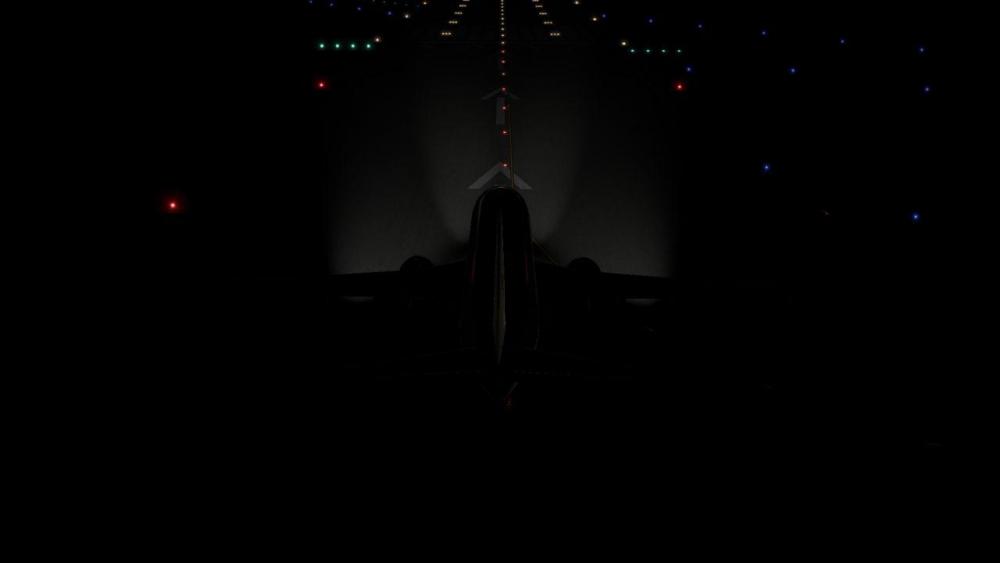
We do get complaints about the lights being too dim from time to time. For me the lights are pretty much like I have experienced them while flying this plane. So I attribute these reports to two categories: 1.) Reports like yours where the screenshots are quite a bit more dim compared to what I see! 2.) Reports of users that expect aircraft landing lights must be really bright because how can you see the runway without them? Landing lights are tilted down, so they can illuminate the touchdown zone as you approach it (with 1-3 degree pitch up). So while sitting on the ground, they don´t shine very far, they are angled down 4-6 degrees! They are designed primarily to increase visibility of the airplane for others, not to illuminate a dark runway enough to land on it. That being said, I think they could be a little brighter, but: You can adjust the intensity in Planemaker, viewpoint. I think they are already as bright as they can go (700 meters out of a maximum of 999 meters) - so just like the annunciators in the cockpit they could be a little brighter in my opionion, but X-Plane´s lighting code does not allow that. Cheers, Jan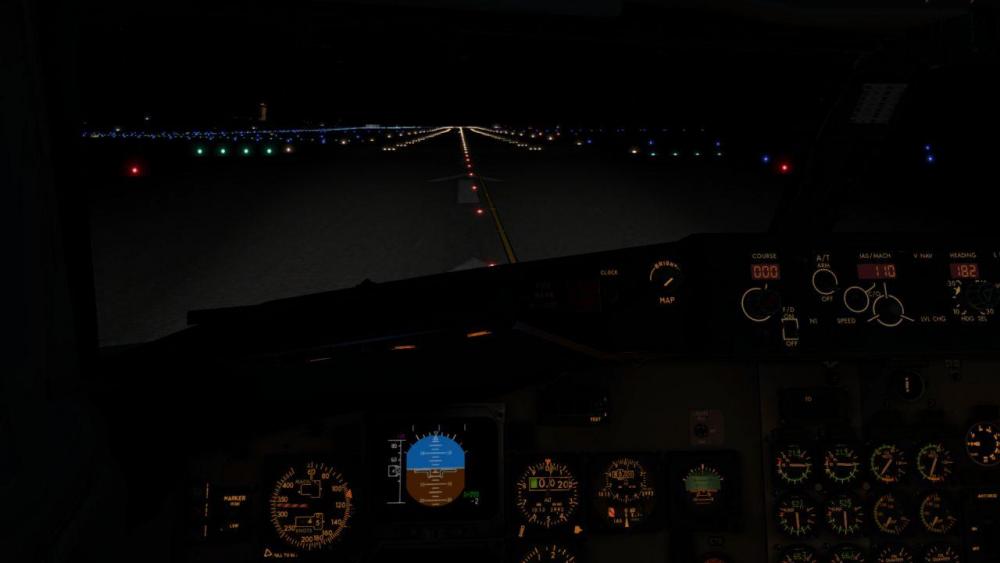
-
Does it work when you just use the buttons? Note that if you assign an "axis" (like a lever on your joystick) to the speedbrake, the button commands will not work anymore. You will then have to move your speedbrake with the lever. The autobrakes (position RTO, OFF, 1,2,3,MAX) have nothing to do with the speedbrakes, they only work on the wheels. Jan
-
VNAV initiates descent at TOD even though MCP ALT not changed to lower.
Litjan replied to Alpha Floor's topic in Bug Reports
Yes, that is essentially what I see, too. I didn´t see your mouse when you clicked the the ALT HOLD, but if you did it, then the behaviour is of course correct. The two things that are not right are: 1.) Orange speed cursor moving "up" to maximum speed (it should move down slowly in relation to "VNAV PATH ERROR" shown on the vertical deviation bar). 2.) Aircraft descending while in ALT HOLD. It looks like it is "trying" to follow the VNAV PTH, but it should not at all while in ALT HOLD. It could very well be some variable going to an extreme - this is the type of bug that is hard to troubleshoot because you often have to have the "exactly right" conditions to see it. I invite you to watch this behaviour and see if you can repeat it consistently. Of course you did the right thing - when the automation *** up, reduce the level of automation or even revert to manual flight. We are Boeing pilots, not Airbus ;-) Happy flying, Jan -
VNAV initiates descent at TOD even though MCP ALT not changed to lower.
Litjan replied to Alpha Floor's topic in Bug Reports
It should not go down, and if you look at your video, it didn´t - it stayed at the flight level and increased speed (that was wrong). I think you maybe pushed on your yoke by accident, the autopilot went to CWS pitch for a second. Pushing on the yoke while the autopilot flies will actually change the pitch a little bit... I just tested the behaviour here on my end and it worked as it should. The speed cursor drives down slowly, while the VNAV PTH changes to ALT HOLD. Energy trading. Not sure what happened during your flight, some weird combination of values, maybe... Cheers, Jan -
VNAV initiates descent at TOD even though MCP ALT not changed to lower.
Litjan replied to Alpha Floor's topic in Bug Reports
Hi Jaime, I have to check this behaviour again - what you see (initially) is quite normal - the aircraft will start to reduce speed to "trade energy". In other words, it assumes (if you have not reset the MCP as requested) that you need to maintain the current altitude for whatever reasone (usually ATC, some traffic below) but would later on like to regain the pre-calculated descent path. So it "helps" by reducing speed, which you can then later regain (by descending more steeply) and therefore have an easier time re-intercepting your calculated descent path. The minimum speed commanded should be green dot (minimum clean), though. Looking at your video it looks like the speed bug goes to maximum speed (and the aircraft accelerates), though. This would clearly be a bug! Thanks for bringing this to my attention, Jan -
Hi Doeke, make sure you set the buttons for the speedbrake to "extend one notch" and "retract one notch". The speedbrake in the 737 has these "detents" (defined positions): Down (full forward). Here the speedbrake will only deploy automatically when the reversers are deployed, i.e. during a RTO. ARM (one step aft). Here the speedbrake will deploy on gear compression and wheel spinup (normal landing). FLIGHT (one more step aft). This is the furthest position the speedbrake should be used during flight. FULL UP (full aft). This will manually deploy all spoilers to the maximum position. Selected manually as normal operating procedure at touchdown and when doing a RTO. (Automatic deployment is just a backup in case the pilot forgets). Jan
-
Sounds about right! Cheers, Jan
-
For what it´s worth: When I was a young FO on the 737 I was flying along on a Captain´s candidate checkride. One flight was from EDDS Stuttgart to EDDF Frankfurt, and this was the one and only time when the FMC on that aircraft was INOP! Imagine his joy . Nevertheless, the FMC is a MEL item and can be inop (just like the autopilot or autothrottle...) - with some caveats, of course. We flew that flight (at least the whole SID) with conventional nav - but then soon were given vectors. But we often flew SID´s "conventional", just to stay proficient. Cheers, Jan
-
I will actually forward this to Tom - I personally have only a very faint idea what a dataref is
-
Will do! ;-)
-
Hi Jaime, the old "configuration" pretty much stays the same. NO "stability augmentation". As for the "response curve" - it is a bit up to the personal preference and hardware used. If you have a full yoke, you may want to go with "linear" (= a straight line, proportional displacement). The "less travel" your control device has (the shorter your "stick" ) the more "curve" I would add to the response. That way you retain relatively fine-grained control (steering surface displacement per stick displacement) near the center position, but still have full deflection when you cram that stick to the stop (like in very gusty conditions or a wake encounter). Cheers, Jan
-
Navaid Ident Volume too Low
Litjan replied to Alpha Floor's topic in 737-300 Aircraft Systems and Operation
I noticed this as well, and we are looking into this! Cheers, Jan -
I haven´t tested this at your airport and those settings, but what you describe could very well be realistic behaviour. When starting the CFM56 engine you have "20 seconds" between putting the start lever to IDLE and seeing EGT rise (not even spoolup!). It could take a long time for the engine to spool up, the starter time limit is 2 minutes (from engagement to cutoff). So as long as you stay below that, you are fine. Also make sure to turn off all air-conditioning before you start the engines, this is a common mistake sim-pilots make. At high density altitude, jet engines accelerate VERY slow. This is the reason for the "flight idle" setting which is considerably higher than the 21% or so you get on the ground. It would simply take "forever" to accelerate the engines from 20% while at FL200... When the jet passes 80 kts during the takeoff roll, the autothrottle servo motor gets "cut off" from it´s electrical supply (shown by THR HOLD at 84kts). Now it can´t drive the thrust levers anymore. If the correct N1 is not achieved by that time, the pilot has to set it manually. This is normal. To avoid that, follow correct procedure: Hold brakes Advance thrust levers until both engines reach 40% N1 Click TOGA (for IXEG: Advance both hardware thrust levers full forward) Release brakes (note: If you are at a very high airport, you may consider holding your brakes until N1 passes 60% or so - this should ensure that calculated N1 will be set by autothrottle before the aircraft is passing 80 kts. You can even hold your brakes until N1 is achieved ("static takeoff") but it is not recommended as it places a lot of stress on landing gear and wheels and also increases the chance of foreign-object ingestion and adverse flow in the engine in high crosswind situations. Cheers, Jan
-
The real aircraft has this and we plan to implement it - in a future update of the FMS. It will not be part of the next interim update, though. If you want to "emulate" this function, you can enter the fix (in this case BTG) on the FIX page and then enter (draw) the desired inbound course as a radial from that fix. Then fly to and follow that radial (=bearing inbound) in heading mode (or enter the direct-to again when on the desired bearing). Jan