
Litjan
-
Posts
5,718 -
Joined
-
Last visited
-
Days Won
424
Content Type
Profiles
Forums
Latest X-Plane & Community News
Events
Downloads
Store
Everything posted by Litjan
-

TO Config warning in flight?
Litjan replied to martinlest's topic in 737-300 Aircraft Systems and Operation
The problem in the 737 warning system design (that we have faithfully reproduced) is that the warning horn for the takeoff configuration and the warning horn for excessive cabin altitude (it being >10.000 feet i.e. not enough pressure to breath) is totally identical. Boeing reasoned that pilots are smart enough to figure out that if the warning horn sounds on the ground, it can´t be the cabin altitude warning and if it sounds in the air, it can´t be the takeoff configuration warning. The Helios pilots proved them wrong. After that incident they implemented a new Abnormal Checklist for this, it is called "warning horn intermittent" (or so). It goes like this: If you hear an intermittent warning horn, find out if you are A.) on the ground - this means you are hearing the takeoff configuration warning horn, do not take off! B.) in the air - this means that you are hearing the excessive cabin altitude warning horn, do the "Excessive Cabin Altiude Abnormal Checklist". The vast majority of pressurization problems are due to forgetting to turn on the packs, either after engine start (where you turn them off to have enough bleed pressure to start the engines) or after takeoff (if you took off without packs operating to squeeze out some more power from your engines). -
IXEG 737 Classic for X-Plane 12 Announcement
Litjan replied to Cameron's topic in General Discussion
Just for XP12. -
TO Config warning in flight?
Litjan replied to martinlest's topic in 737-300 Aircraft Systems and Operation
Well, what was your cabin altitude? Just moving the switch to FLT and setting the correct FLT ALT and LAND ALT is not enough, as the Helios pilots found out, too. The next time it happens please take a screenshot of your cabin altitude indicator and also of your pressurization panel (bleed air switches and pack switches). Oh, and it wasn´t the TO config warning, this can only sound on the ground (or to be more precise while the air/ground switch is sending a ground signal). -
TO Config warning in flight?
Litjan replied to martinlest's topic in 737-300 Aircraft Systems and Operation
This will probably answer your question - as the pilots asked themselves the very same question that you just asked https://en.wikipedia.org/wiki/Helios_Airways_Flight_522 -
It is perfectly legal to fly the 737 Classic with the FMC inoperative - in that case you would consult the books to find the correct N1 value, set the carots in manual mode and use the autothrottle or manual throttle input to set the power accordingly.
-
Jet engine performance is complex. A modern jet engine is limited by 3 main parameters: Maximum rotational speeds (N1, N2) Maximum mechanical pressure (maximum thrust) ITT or EGT temperature (metallurgical limit). You are usually limited by the one you reach first (although two simultaneously is possible). If you operate in a high density cool air, you will reach your maximum thrust with a low N1, long before rpm or temp becomes a problem. If you operate in hot temperatures, ITT will become the limit, long before rpm or thrust are maximum. If you operate in very thin air, maximum rpm will be reached before you ever get to max thrust or ITT. I will have to look at the bleed logic again, normally the FMC will sense the bleed extraction logic and allow for the hotter EGT - but it is entirely possible that we have a bug in that logic :-) Unless you enter a TASS, you will always get the maximum rated power for the prevailing temperature, there is no need to do anything "manual". The engine is "flat rated" at ISA+15C, which means that at a temperature below +30C at sea level you could theoretically run it faster and not exceed EGT, but you are reaching "maximum thrust" already. As for fuel - if you land with 2.4 tons of fuel remaining, you are probably doing fine if not even having a bit "too much". The required fuel at touchdown is alternate fuel (ca. 800kgs, depending on distance to alternate) plus 1200kgs (to fly for half an hour). If you go to a situation where you need MORE fuel to get to the alternate, you need to limit your payload, this is completely normal and sometimes done (for example when we fly to BIKF and the weather in the general area is lousy).
-
Yeah, look in that other thread (they all have a "last post" notice at the end).
-
Don´t worry, it even happens to real pilots sometimes (ask me how I know ).
-
The cause for this in 99.993% of all cases (flight simulator and real aircraft) is that the pilot forgot to select the correct inbound course on the ILS´s side.
-
IXEG 737 Classic for X-Plane 12 Announcement
Litjan replied to Cameron's topic in General Discussion
Yes, it is. -
IXEG 737 Classic for X-Plane 12 Announcement
Litjan replied to Cameron's topic in General Discussion
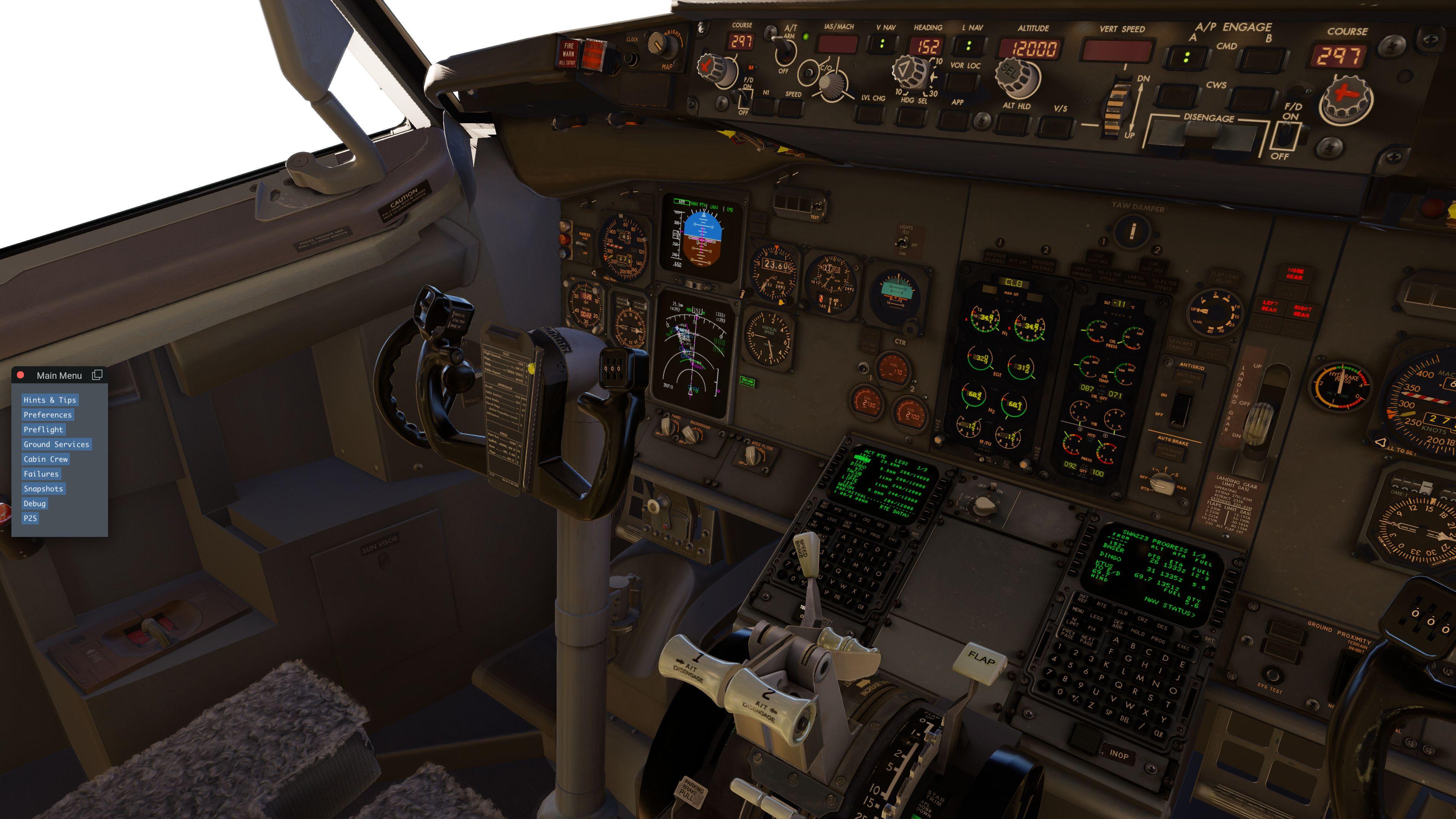
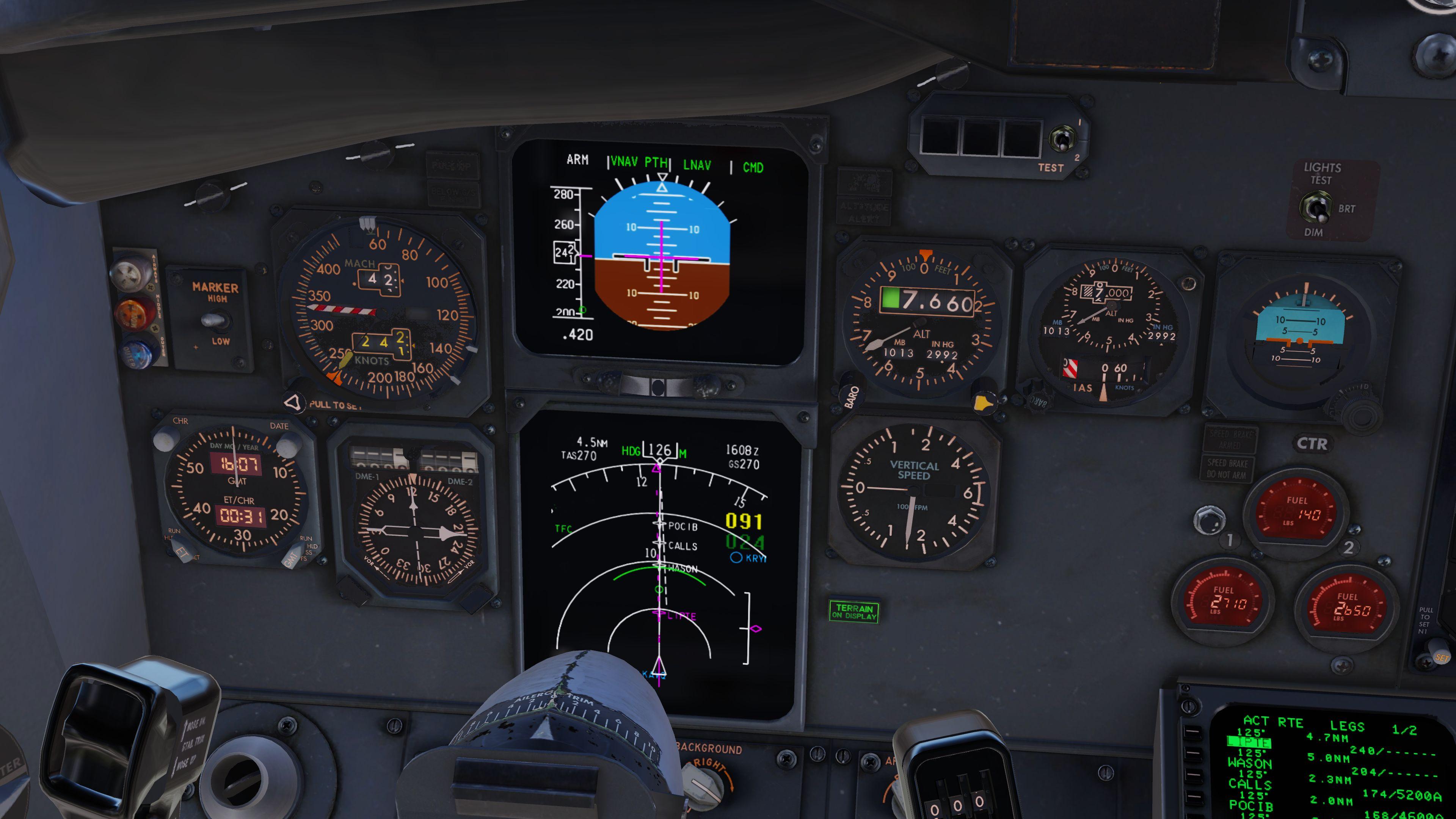
Another successful testflight this morning - Flagstaff, Az to Tucson, Az. We are still ironing out some issues, but here are two screenshots (one showing the current look of the new GUI).
-
IXEG 737 Classic for X-Plane 12 Announcement
Litjan replied to Cameron's topic in General Discussion
We are making good progress! -
IXEG 737 Classic for X-Plane 12 Announcement
Litjan replied to Cameron's topic in General Discussion
I would like to chime in here - I have worked with Tom on this over the last week intensively - previously I had test flown the 737 in XP12 (after we fixed the major roadblocks of even getting if flyable, like making the flaps work, etc.) and I had tuned the flight model. Tom worked hard on 3D modeling over the last months with little for me to do (I am too stupid for blender and those things) and now with him approaching the end of that work, I dove back into flight and system testing. The more I test, the more stuff shows up that does not work anymore, because Laminar changed things - and these changes are all improvements in modeling systems, yet they still leave our "old" way of doing/overriding them unusable. So in a very real way we have to redo a lot of the things we already did for XP11, it is not a quick conversion at all - and this is something we definitely underestimated when we initially said to "upgrade to XP12 for free". The move from XP11 to XP12 is not an upgrade, it is in many areas a repeat of the dev work work we already did for XP11. And I am thankful for most of our customers to be very understanding of the fact that we charge a small price to compensate us for this! I think the old 737-300 still has a lot of life in her, I thoroughly enjoy my "test flights" and find myself again and again to "just finish this approach" even though I was just testing some autopilot PID constant ... simply because it is fun to fly and looks great in XP12 . Cheers, Jan- 512 replies
-
- 17
-

-
IXEG 737 Classic for X-Plane 12 Announcement
Litjan replied to Cameron's topic in General Discussion
Maybe work on your eyesight before taking up flying -
IXEG 737 Classic for X-Plane 12 Announcement
Litjan replied to Cameron's topic in General Discussion
The answer (as good as you are going to get one ) is in the first post. -
Gizmo is under constant development...there have been reports of incompatibility with other plugins before, but to my knowledge those were resolved many years ago.
-
I am fairly hopeful that the flightmodel bugs will be very few, this is something that we can test in-house fairly well. As for user bugs, yes - there is inevitably a large array of different systems and even more so different ways that users operate the airplane that reveal things not working as intended...so every major new release will be followed by collecting user feedback and rolling the resultant fixes into a short-term update.
-
(Auto-)throttle problem
Litjan replied to martinlest's topic in 737-300 Aircraft Systems and Operation
There is also a potential - and much more likely - failure mode on your proposal. Most of the time, people will NOT have their hardware throttle at the "approximately correct" position when they disconnect their autothrottle, they will simply forget to align it before disconnecting. Then they will disconnect, and it will cause their engines to either spool up to maximum power or loose thrust to idle...which will mess up their manual flight and especially on short final is hard to recover. My advice to avoid YOUR potential failure mode is: Do not get into a situation where only adding full (overboosted) thrust will save the aircraft . In "most" situations of "being a bad pilot" and being too slow, the reversion modes of the autopilot or autothrottle (if in arm) will kick in to save the aircraft. In other situations you can click the TO/GA buttons to advance power automatically to maximum GA thrust. IF you ever get into a situation where you need to apply maximum thrust you need to remember to cycle the thrust levers from idle to full power once (which will take 0.5 seconds), but yes, you need to remember and this is different in the real aircraft. It is the compromise we have to make for not having motorized hardware throttles. -
(Auto-)throttle problem
Litjan replied to martinlest's topic in 737-300 Aircraft Systems and Operation
Normally it is not necessary to "see" the ghost throttles to regain control of the thrust levers. You just need to have your hardware throttle be at the "same" position as the virtual throttle AND the throttle must not be under control of the autothrottle. This is what confuses most users, they try to regain control but have not disengaged the autothrottle. Once the autothrottle is disengaged, just move the hardware throttle over the full range of movement (from full forward to idle power) and you should "capture" the virtual throttle along the way somewhere. A little more refined is the method as above, but move the hardware throttle slowly while watching your virtual throttles - as soon as they start to move, you know that you have regained control. This is independent of using VR. -
@AngelOfAttack That is certainly viable - and I know some airlines also use the DH to provide some sort of terrain awareness. However, you still get the automatic radio altimeter callouts, so if your minimum is 200 feet above the threshold, the automatic "200" callout will double as a (close) reminder. When approaching in considerably better than minimum weather conditions we used to be just brief "minimum is visual" but that was later reversed as sometimes weather was surprisingly worse than expected and no minimum was set that the crew could refer to as the plane got closer to the runway but could not pick it up visually.
-
It is not recommended (and even against regulations) because the radio altimeter will say "minimums" when it measures 200 feet radio altitude. But since the terrain in front of the runway may be a hill or a valley, this may not really be "200" feet above the threshold - as it is required for a CAT I minimum. If the terrain in front of the runway is very flat, this will work. But legally it is required to reference a DA (decision altitude) with regard to MSL - not a decision height with regard to radar altitude, like you would on a CAT II or CAT III approach. Even on a CAT II approach you will often not set your DH to 100 feet - but to 98 feet or to 102 feet or so - to allow for undulating terrain in front of the runway threshold.
-
Video clips from 2022 flights, thank you IXEG Team!
Litjan replied to Iain's topic in General Discussion
Great video, you have a good eye for nice shots! -
Constant beep (cockpit alert) at takeoff...
Litjan replied to vnangli's topic in 737-300 Aircraft Systems and Operation
You are close to an "inner marker" - it is a radio transmitter near the end of some runways that will alert aircraft on approach that they are about to see the runway (if they fly in clouds). You can move forward until you dont hear that sound anymore, fly from another runway or disable the sound by deselecting the "marker" audio channel on the audio selector panel. -
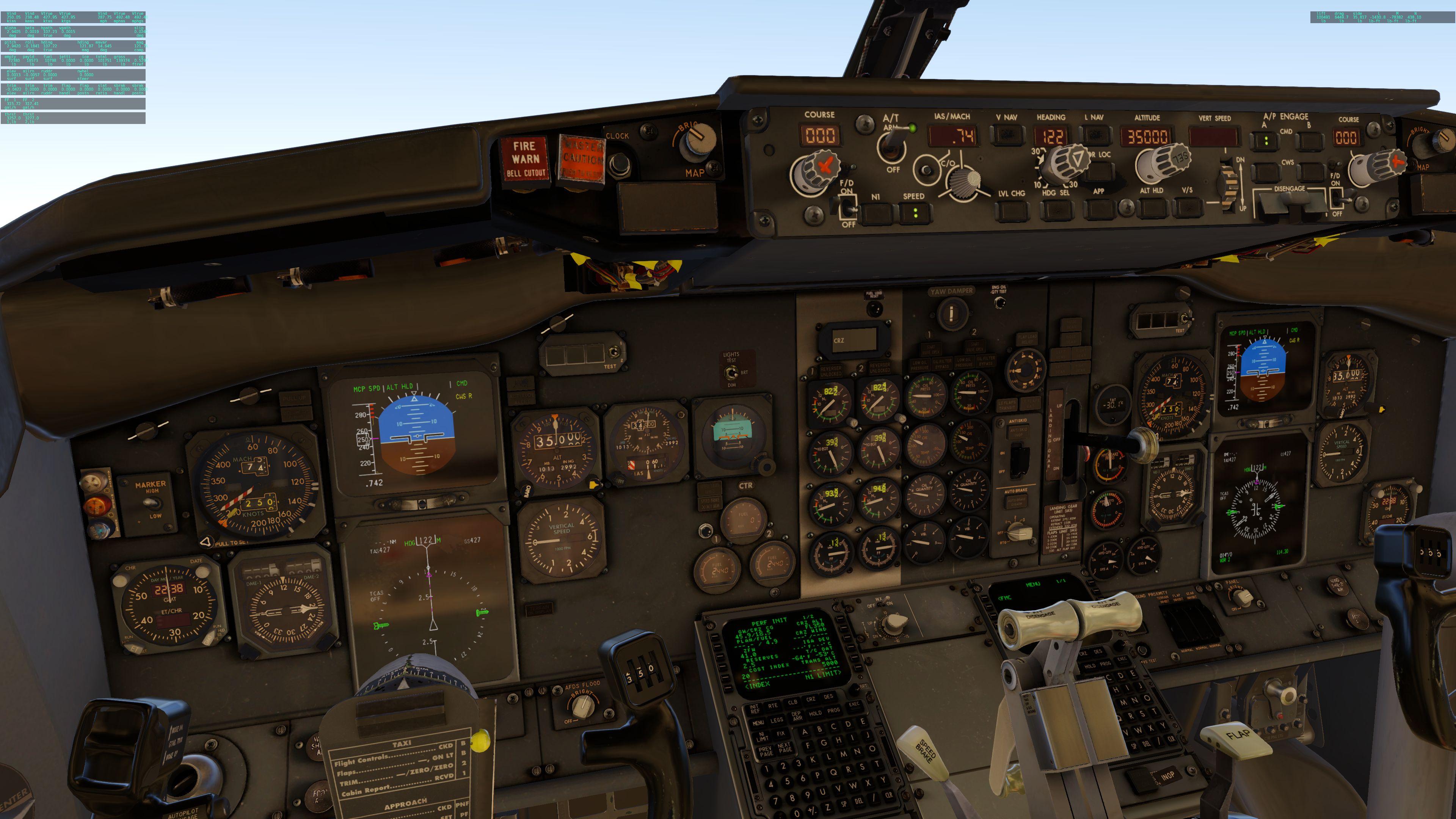
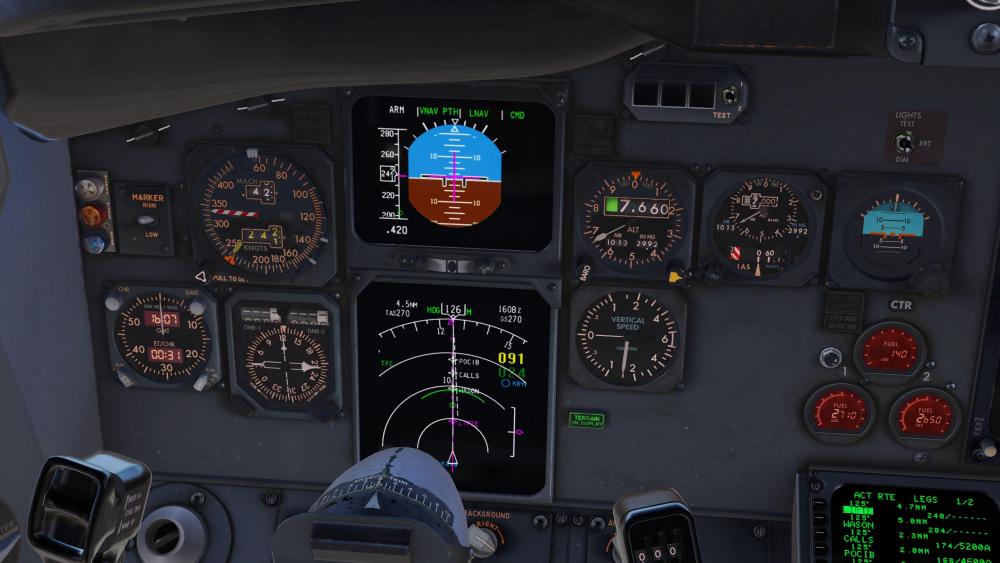
Today some high altitude flightmodel testing for the conversion. The picture shows steady state at FL350 and M.74 with 46.000kgs. Book values (official POH) are: 82.8%N1 and 1009kg/h FF.

- 90 replies
-
- 14
-
-
The first thing I would do in your case was posting in the correct forum, corresponding to the aircraft you are trying to fly. Good luck!
- 1 reply
-
- 1
-