



Litjan
-
Posts
5,720 -
Joined
-
Last visited
-
Days Won
424
Content Type
Profiles
Forums
Latest X-Plane & Community News
Events
Downloads
Store
Everything posted by Litjan
-
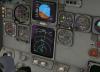
Hi everyone, we have another teeny little piece of news for you. Today I want to show you the work we have recently done on our EHSI. On the attached picture you can see the EHSI as the lower of the two screens. While the possibilities of displaying data on the EHSI are numerous I would like to point out what you are seeing here. The depicted mode is the "expanded map" mode, showing the area in front of the aircraft. The aircrafts position is the tip of the white triangle at the bottom of the screen. Look closely and you can see the "ground path prediction" lines extending from the tip of this triangle, they represent the path the airplane will take within the next 90 seconds (30s per segment) at current turn rate and ground speed. You can use this to make very smooth intercepts when using smaller map ranges. Comes in handy for the final turn from base during a strong head or tailwind... The selected range is 40NM (you can see the 20 on the mid range ring), the map can be displayed in 6 steps from 10 to 320NM. You can see the two tuned VOR´s show up in green - along with the bearing lines, the green dashed lines. These lines are selectable (tuned VOR´s always show), and a great way to check your map accuracy - since the lines bearings are directly taken from radio signal data (displaying radials) and the green navaid symbols positions are drawn from the map´s database. So if they don´t intersect - your map has probably shifted. Also displayed are the airports within the selected map´s section. You can select to show airports, navaids, fixes, etc. on the map with the help of pushbuttons on the EFIS control panel. The magenta dashed line is the heading bug - you can see the aircraft is turning towards that heading. The white line with the little rhomb at the top is the current track - look how it is influenced by the crosswind from the left. This track line will make it very easy to establish the correct wind angle when tracking along the localizer, for example. The wind is shown on the bottom left - but unlike default x-plane we don´t show the wind while on the ground. Why not? Well, the real airplane can´t do it either - the wind arrow is a result of vector calculation between IRS track and groundspeed versus heading and true airspeed. In other words, the plane needs to "sense" the drift before showing it. On the ground there is no drift - > no wind indication. Now you try explaining that to Austin :-) Of course we also don´t show the wind if its magnitude isn´t big enough - just like the real plane won´t. The top line will show GS and TAS, and also the current magnetic heading. Now if you really look at the bearing line of VOR 1 very closely, you can see another green line with the label "A1" overlay it. That is the bearing of the selected NDB - coincidentally pretty much the same bearing. NDB´s positions are not shown on the map, though. The dashes in front of the NM at the very top are the placeholders for "distance to next route waypoint" - blank in this picture since no route is loaded in the FMS. More to come soon, Jan
-
Hi guys, just a little heads-up regarding development. Below a reply by Tom: A user on our blog requested an update on the project and perhaps some regular postings to let users know what is transpiring. The team feels that is probably a good idea at this time. Up until this point in time, we have been cautious about posting for a variety of reasons, but the primary reason is (and still is to some extent) our concern about whether or not we could do such a challenging project to the level that we envisioned when we began. A highly accurate airliner project of what has become known in flight sim lore as "PMDG Level" has always been somewhat of the "holy grail" of flight simming....and the team felt like X-Plane was long overdue for such a project. Of course like anything in life, these things can only happen once all the variables are just right....X-Plane technology, developer experience, willingness, timing, etc. The CRJ-200 by JRollon broke the ice for X-Plane in a big way. As much as we love it though, the 737 is more of the airliner standard and is why we chose to do one. We thought that perhaps starting with the classic instead of the NG would serve two purposes. 1.) It showed some deference to the x737 project and 2.) we BELIEVED it would be somewhat easier than the more complex 737ng. Well we were wrong. The NG is probably way easier than the classic. Why? Steam gauges..that's why! Now that we have steamrolled through most of the systems on the aircraft, they are really no different than the NG in complexity, only in their implementation. The steam gauges; however, are not just simple graphics, they're complex animations with rolling digits and wavering needles and flipping flags. We even went so far as to put in motion blur on the DME rolling digits on the ADF. I tell you that a LED readout or computer graphic would be much easier What has transpired though as we have seen the cockpit and systems come together is that we very much have a fondness for the steam gauge elements. This particular variant of classic we are doing uses the modern glass EADI / EHSI and somewhat fancy ECAM and somehow delivers the best of both worlds, modern glass and steam gauge "complexity" and is really a feast for the eyes of cockpit fans. It definitely pushes our techo-geek buttons. So about the state of the project. Given the experience of our team members, we decided early on to pursue systems programming first. It is always the most challenging part of a project and can stop a project dead in its tracks. The downside to this for anxious simmers is that is does not give us much to show. Code is not very exciting to look at, indeed I am finding it quite offensive to look at as of late. It is my guess that we probably have over 30,000 lines of code and counting daily. There is some good news though and that is we have just about every major system "over the hump". Just about every major system means just about every one except the FMS. Of course we have 'punchlist' items' on each of the other systems to do. The FMS framework is mostly implemented though. We have the CDU interface and pages mostly complete, we also have the autopilot mostly done and what remains is the calculation of VNAV and HNAV elements and the building of the flight plan. These elements will integrate with the ESHI display so we work on these elements simultaneously and these will come together at about the same time. We expect to begin this phase "next". As far as the 3D work goes, we believe this is the easiest and quickest part, even though it is the most visible. We have a good portion of the fuselage done and textured but no wings/flaps yet. We do not have the main gear modeled yet either and the engines are about 30% modeled at this stage. The systems accuracy is the heart and soul of our project and to be honest, you probably will not see all the cool 3D screenshots until we are on the final stretch. We are also beginning our documentation process and getting ready to grow that element as the systems punchlist get completed. I cannot stress to you how in-depth the systems will be and why the programming is taking so long. "Systems simulation" has always been a bit of a marketing buzzword by add-on developers but our consultant, a 737 captain of ridiculous attention detail will not let up. We read the real POH page for page, system descriptions word for word and if it says it in the POH, we try very hard to put it in. For example…did you you know that in the case of automatically deployed speedbrakes on landing, that you can advance the throttle levers a bit after landing to "auto-stow" the speedbrakes? Bump the throttles up a bit and watch the speedbrake lever go from "up" to "down" on the throttle quadrant. You cannot do this though if the speedbrakes were not deployed automatically from the armed position. If you move the speedbrake lever manually to deploy them on the ground, the 'throttle bump' will not work. Who uses that anyhow? Our consultant thats who! He lands and bumps the throttle instead of moving the speedbrake lever. So if he does it, we do it. He is really starting to bug us! So to summarize this long-winded post for now, upcoming in the ensuing months is more 3D development of the cockpit / wings / flaps / gear, punchlist items on the major systems: hydraulics, electrics, pneumatics, IRS, etc. Development of hnav/vnav and the EHSI and the documentation. Final work will probably be the 3D cabin, eye candy and user-interface elements. That's the plan anyhow. Tom Kyler Laminar / IXEG
-
Thanks for the nice video! It is really well made, I like the long distance-shot of the landing in the beginning especially. It also brought back the feelings of fear and anxiety I used to have when flying the 737 to Thessaloniki and Athens in the late 90´s.... Controllers without radar (because pay is better if you don´t have radar!), chaotic operation at airports that were plagued by inadequate facilities, high terrain, changing weather, rampant strikes - ah the good, old days ;-) Video´s like this will be very interesting for owners of our (or any well-made 737 classic, for that matter) 737-300 and the stuff you see you can also do in ours :-) Regards, Jan
-
Hi there, still working on it... we are well underway on the 3D and outside appearance - some preview shots coming up soon. List of remaining systems to be done is getting smaller...slowly. More to come soon! Jan
-
Oh, I am using TrackIR - can´t recommend that sort of device enough for realistic operation in a 3D cockpit... Jan
-
To ease the waiting time for everyone, we have added another video that shows the final part of a dual-channel autoland approach. You can view it either at our blog or on our youtube-channel. Here is a direct link: http://www.youtube.com/watch?v=YZj3a6DwH_g&context=C39b3a84ADOEgsToPDskJvPSg2podgypyhrssYiem4 Enjoy, Jan
-
Well, just to reiterate - the project is still moving ahead as planned - whatever that means . We are all people doing this in our free time, and I think it is completely normal that real life takes the upper hand once in a while. We all have jobs with sometimes fluctuating requirements and families that come first and before everything. Making our living with our daytime jobs also decouples another motivational factor to a certain extent: Money. This has two effects: A.) Quality goes before release-date. This is good, I think. B.) We don´t go hungry until release-date - this is somewhat of a detrimental effect to progress. If we don´t feel like it, we don´t work on it and still don´t suffer. So what motivation drives us? Money to a certain extent, of course - but as I explained in a previous post, we won´t get rich with this. Not even reimbursed appropriately. I think foremost the motivation driving us is some geeky satisfaction in pulling this off, working together with friends and delivering a product that makes us proud and many users happy. Of course we always knew we are developing in a timeframe that puts our release into XP10s territory. The initial problems with the early beta´s did somber us up quite a bit. Yes, there are a bunch of cool features, but right now it reminds us more of a muddy construction site with the architect standing on the side, fiddling with some oversized blueprints than the gleaming glass-steel-and-concrete palace we where expecting. The promise is there - it just needs to materialize. And we were pulling up in our moving van with all of our furniture in the back... Just an example: For our development it is important to shut down and restart the simulator many times a day. Even with my brand-new SSD starting XP10 takes longer than FSII from Sublogic took on my old 1541 floppy disk drive (2:40min)... So for now we are developing on XP9, and there is no plan to change that so far. Another issue is frame-rates. Yes, I can get good rates in XP10 if I shut down the eyecandy. But we all know how that goes. No one wants to do that, and then everyone complains of low frames. And our 737 WILL need some computational power, and if you start out with 25fps to begin with... not good. Nothing is decided as to what platform we are releasing for intially. My personal guess - please don´t hold me accountable for that - will be XP9 initially and XP10 later on. A word to alleviate fears of this project dying down - unlikely! We are too far into this and have spent too much time. Even if we dumped what we had right now out on the market it would already be a fantastic airplane to fly and operate, even while lacking some systems. So unless the sky caves in or the martians invade, you will get your hands on this Jan
-
Hi everyone - we took a little timeout over the holidays, everyone spending some quality time with his families. There has not been much development for the last three weeks. I feel that this also gave us a well needed rest and a chance to reasses where we are standing in the rapidly evolving X-Plane world. The major new factor has been the beginning of the X-Plane 10 beta process. Initial hopes that our 737 would also work in XP10 with minimal adjustments have proven not to be true. On the whole the IXEG team is underwhelmed with the state of XP10 so far and we feel it would be futile to release a plane trimmed for X-Plane 10 right now. There is no doubt that XP10 will continue to stabilize and improve, but we think that this will take a while. Jan
-
Glad you like it. 1. It depends. You will get a warning of the IRS if the position you put in differs too much from the original position before last shutdown. The IRS can also catch a latitude input error if it is big enough (it "feels" the earth rotate underneath during alignment). A wrong longitude input will not be caught initially - but soon the FMC will warn you, because the IRS position does not match the data from the automatically scanning DME´s and the GPS. Also you will not see the route you put in on the map. The ILS and VOR receivers are independent of the position, you can use them even with the IRS not aligned (but the FMC uses those signals to update it´s position). The whole thing is complicated and we took a little liberty with it in our model. You can not ultimately put in the wrong position - it will keep rejecting it until you put in one that is reasonibly close to the "real one". This way we don´t have to maintain an "offset" latitude and run our own navigational model in relation to that. Note that the IRS´s WILL drift over time in our model, the indicated position will become more inaccurate. The aircraft´s position will stay accurate (as in real life) as long as the GPS and radio updating works (which it usually does). 2.) Transition altitude is the altitude above which you set 1013.2hPa on the altimeter, so all aircraft fly at the same reference (flight-level). Below that you would fly the local altimeter setting (QNH), so you are always at the same altitude referenced to sea level. 3.) There are 6 fuel pumps altogether (plus a scavenge pump, which we also model). Each tank has two pumps for redundancy and also to always supply fuel in case of high attitudes (where all the fuel would run backwards or forwards). One pump is enough to supply fuel for full power. If all pumps fail the engines keep running on "suction feed" - so don´t expect them to flame out when you turn off the fuel pumps! (Can´t wait for the bug-reports on this one ;-) ) . Thrust degradation might occur at high power settings/altitudes. Jan
-
Yes, I remember going through this with XP8 and XP9...this time it´s a bit different, though. There has been a marketing hype buildup with videos and screenshots. The whole community (this includes a lot of FSX users) is very excited about this release and everyone has high expectations. Austin has made some pretty big remarks. People expect XP10 to deliver right away. A first impression is a lasting one - especially if it is your first contact with X-Plane. There is no clear mention of the "beta"-nature that this demo has on the website. Disappointment will run high I fear. I am here to stay - I am just afraid that this will not be an ideal start for XP10 as a competing product in the flight-simulator market as a whole. Jan
-
You just might be lucky enough to take that long...hopefully some of the worst bugs will be fixed by the time you download! I am having trouble to stay above 20fps with some decent rendering options around default KSEA - also get graphical errors on some settings (green water, red runways etc.). The shadows are killing my framerate and the in-cockpit-shadows are jittering all over the place dependent on the camera angle (which shouldnt affect those). The whole view system has been redone (not sure if to the better) and I can´t set up my joystick system because X-Plane freezes whenever I access the "axis" screen... I foresee a public relations disaster descending upon Laminar. I know one guy who won´t care about it, though... just blast some more toy rockets into your neighbours house, I guess... Jan (disappointed, if you can´t tell)
-
Finally got around making that video I promised you . http://www.youtube.com/user/IXEG1 Enjoy, Jan
-
Hmm - what use for the wing-anti-ice do they have then? Or is it because they never encounter icing conditions? Maybe it is different on the NG. I have heard that the A380 has no wing-anti-ice at all - supposedly its leading edge is shaped in a way to make it impossible for ice to accumulate. Also the 747-400 I flew could not turn on the wing-anti-ice when the leading edge slats were extended. So I guess there are different configurations possible. Jan
-
Same here for the engine-anti-ice. The rule is visible moisture and temperatures between +10C TAT and -40C SAT. During descent there is no lower temperature limit. When I say "we turn wing-anti-ice on all the time" I use a misleading phase, sorry. I do not literally mean that it runs the whole time. During the winter I use it about every second flight, in the summer much less if at all. This was just to emphasize that I find it hard to believe that some pilots have never turned it on in their whole career...well, maybe if they fly in the Southwest US or Africa or the tropics it wouldn´t surprise me. I am not aware of a hard limitation on wing-anti-ice as far as altitude goes. There is a caution note that says: Use of wing-anti-ice above approx. FL350 may cause bleed trip off and possible loss of cabin pressure... Jan
-
Well, I think we are mixing up some things here. First, we turn on wing-anti-ice all the time during flights. Whenever you go through clouds that have suitable moisture (temperature/droplet size) ice will form on the leading edges. You then turn on the wing-anti-ice to heat the leading edges, this will shed the ice. You could theoretically turn on the wing-anti-ice even before accumulating the ice - but this leads to a bigger performance penalty and also entails the danger of droplet running back over the warm leading edges and refreezing further back on the wing. Thats why we use the anti-ice more like a de-ice... The other part of the problem is the rather large pneumatic demand that the wing-anti-ice system places on the air system. A lot of air is routed from the corresponding manifold side to the leading edge. There are certain limitations going along with this - for example you are not supposed to run the system of the APU - it would just overload its capability to create bleed pressure. It is however not a problem to run the wing-anti-ice AND engine-anti-ice while both engines are running at a decent RPM and/or at lower altitudes. There will still be enough pressure left to drive the pressurization. I think you might run into trouble if you want to drive all of this at 37000 feet and idle power (just starting the descent, for example) - but then again there would be no need for wing-anti-ice up there. Ice will usually only form with TAT´s of about -20 to +3 C or so. There are many more ramifications of the system during degraded operation - for example during engine fire. You will close the isolation valve to avoid smoke and fumes from the damaged engine to enter the airconditioning - but then you would have no pressure for the wing-anti-ice on the damaged side -> asymetrical anti-ice -> bad! Also if using the APU to pressurize the cabin (possible up to 25.000 feet) after a "no bleeds" takeoff you can´t use the wing-anti-ice. So if performing such a take-off in icing conditions with an engine failure could get you into trouble really quick. Nursing the aircraft across that mountain ridge - can´t turn on the bleeds because you need all the power to get across the terrain - ice forming on the wings because you can´t use the APU to power the wing-anti-ice... Jan
-
We are thinking about adding some effect...just don´t want it to be cheesy or unrealistic. Austin´s "window icing" is very basic - if it is ON then there is no ice, if it is OFF then there will be ice under what he considers to be icing condition. Real life works a bit different (as usual). The 737´s window heat is always on during flight, as a matter of fact you need to turn it on at least 10 mins prior departure. This is both to avoid ice buildup and fogging, but also and most importantly to make the windows flexible so they can withstand a bird-strike. BUT there is still some ice building up on the windows if you are in moderate to severe icing conditions - just around the edges, not really impairing the vision too much. So, yes, I think we will have some icing effect - just don´t expect to "toggle" the switches to get rid of it. They are always on. The anti-ice for wings and engines works a bit differently, but that is another story. Jan
-
Sorry, I am too busy playing Battlefield3 this weekend! If you want to help, come online and be my target so I can get to level 50 faster . But the development team put the basic cockpit shell back in and I have a couple days off after this weekend, so hopefully we can whip up a small movie during that time. Recently we finished a couple more small systems. Window and pitot heat (including test modes, of course), wing- and engine thermal anti-ice and the firewarning panel. Also the gear lever (including the famous "off" position) with it´s lights. Jan
-
Hello Rhydian, hello Meshboy, the video you saw there briefly was tagged "public" wrongly. It was actually a movie of a nasty autopilot bug that killed many virtual passengers . I am happy to say that the autopilot is steadily improving, though, and only kills me once in a while now. To do a demonstration about the electrical system would be very boring - not a whole lot of switches to move, and the effect would be limited to some caution lights and flags coming on and corresponding instruments going offline. We have a debugging tool that lists all the busses and wether they are powered or not. You´d need to lay the electrical diagram on the side while watching to understand what is going on. Geeky stuff! I will add bits about the electrical system into the other systems-video, though. For example, I can unpower a transfer bus by disconnecting it´s AC power source and moving the bus transfer switch to OFF, then try to start an engine without the corresponding igniter system powered. Now THAT is showbusiness! Can´t say too much about IXEG and XP10, except that yes, the IXEG 737 will be a XP10 product. My personal guess is that we won´t release before XP10 is declared "final", though (out of the Release Candidate state). Jan
-
You wouldn´t want that - trust me Jan
-
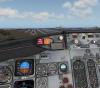
All right, all right Here is a shot of an approach to KPHX 25L. Autopilot is in command, just past the decision height. Again, a beta shot. Minor things are not right in that picture, yet. There is no Vref depicted on the speed tape. Also notice the hollow yellow bar extending from above - this shows the placard limit for the next logical flap setting. In this case it would be 158kts for flaps 40 - in the real plane this wouldn´t show, because the landing flap setting of 30 is known to the FMC. Also some minor things not working yet on the engine instruments (oil pressure too low), and some symbology on the EHSI missing (M denoting magnetic heading, track line, etc.). If you have any other questions about what you see, please fire away. Jan
-
Thanks for your replies. We do watch the response we get on these forums very closely. There is an ongoing fruitful debate within our team about user expectations, and it is very interesting to hear what users like - although we know that there is also a "silent majority" that never posts. No one wants to model a feature that is never used. And everyone wants to model the feature that is used the most. But which is which? Where to draw the line? Fortunately (for me, and also you, Emalice) it turns out that once you do a system to a certain level, it is EASIER to make it more realistic than to work around the problems brought about by leaving out some stuff. Let me give you one example. Yesterday I talked to one of our developers about the AUTO FAIL feature of the pressurization system. This light (and the subsequent auto-switch to STBY mode) gets triggered by 5 different conditions, one of them being the TRANSFER BUS 1 being unpowered for more than 15 seconds. We faithfully reproduce that - with the unwanted outcome that every time you start the airplane cold and dark, the "AUTO FAIL" will be triggered when you turn on the battery switch (those warning lights are powered by the battery bus). Of course it is triggered, because the transfer bus wasn´t powered for 15 seconds! But this is not what happens on the real plane, otherwise I would have to reset the pressure control every time before flight when taking over a plane that was without AC power for more than 15 seconds. So where is the difference to the real plane? The real controller doesn´t monitor the 15 sec interval until it is powered (STANDBY controller is powered by TRANSFER BUS 2), so it won´t trigger during initial powerup. Now back to what I said before about modeling the whole system. If you decided to model a part of it (the 15 sec trigger) you are basically forced to also model the "don´t guard until powerup" part. Otherwise it won´t work satisfactory. This chain of features depending on subfeatures seems to lead us into modeling things all the way - which takes it´s time, but will ultimately be worth it, I think. Regarding the price - nothing is decided yet and I could not even give you a rough estimate. Jan
-
2x, 3x, I like the trend I am seeing here... Jan
-
This is a copy+paste of my reply to the request for some news at the .org: Development continues at a steady pace. Programing systems is a long, tedious and sometimes very boring job. Our design paradigm calls for every button and knob in the cockpit to not only be functional, but also to have a realistic effect. If you look at this from the designer perspective in a cost/benefit relation, it is a not a very smart decision. Why? I give you an example: We are currently working on the IRSs (don´t fret, my american friends, we are not after your money! . Well, we are, but we can´t throw you in jail if you don´t pay). The IRS (intertial reference system) is basically a black box that does "it´s thing" in the background. A very expensive black box.The pilot turns it on, enters the position in the FMC and when the day is done he turns it off again. If you feel bored you can run a quick or full alignment after a couple hours when on the ground to improve accuracy. This is 95.0% of the interaction that will happen in the real plane, and probably 99.0% of the interaction that users will do in X-Plane. BUT the IRS´s can do sooo much more! You can input position manually on the CDUs. They display a lot of information on their CDUs. They have an ATTITUDE backup mode (complete with manual input of heading that will drift). Their position drifts over time. They measure latitude during alignment. They need time to align and shut down. They display certain lights, warnings, error codes and sound for certain conditions, failures and omissions. They have a test mode with effect on EADI, IVSI, etc. Other developers claim to have "custom realistic systems" but really only program for 99% of the users - they are smart! We spend the time to get another 0.9% of the users satisfied. The ones that have some background knowledge or the time to read the real operating manual. The ones that like to push some buttons and see what happens. The ones that will try the ATTITUDE backup mode and monitor IF heading drifts over time with an accurate rate according to the current latitude... the system geeks... like me . Other developers get away with their way - if someone shows up on the forums to complain about omissions like that it is easy to dismiss that as being not important (and 99% of the users will agree!). We draw the line a little further. We omit a feature only if it is definitely to our knowledge not possible to achieve with the current technology available in X-Plane. We have to deal with the background framework of that. We can work around, expand upon and really stretch the limits - and do as far as we can. This costs us dearly. Developing this last 0.9% bloats development time (my estimate) somewhere between 2 and 4 fold. If we had to feed our kids with development work for X-Plane we couldn´t do that. The user base for X-Plane is not large and not wealthy enough to pay us an adequate amount for that kind of work. Think about the numbers behind this. What is the average pay per hour for a very talented programmer in your country? And a rough estimate of time necessary to make this kind of airplane? Maybe around 10,000 man-hours. Multiply this with the pay per hour. Divide by estimated copies sold. Add another 20% or so for distribution overhead. Result is the cost per copy we´d have to charge if we wanted to do this full time as a job. Obviously this wouldn´t sell many copies... This is also the answer to why PMDG can do this full time and make money. The very different variable in their equation is "estimated copies sold". So why do we do it? Several answers to that one. First we are determined to make the best and complete airliner available for X-Plane. Many cool planes have been done for X-Plane, but we want to not only push but shatter that boundary. We want to build a name for us, so IXEG will be synonimous with ultimate accuracy and fidelity. Second we all have real life jobs that feed us. Yes, we want to make money with this plane. Yes, we want our time spent reimbursed. But we can afford to be economically unsound about it. This will not benefit most of you... just about 0.9% . Third we are X-Plane enthusiasts. We love tinkering with this kind of stuff. If you love what you do, you are willing to do it for less money than someone who hates his job. (This is, by the way, the root cause of many pilots being not paid very well around the world. But that is another story ). Forth the team was dumb enough to ask me to be their technical advisor. I get to test every system that gets into this plane. I not only test for correct functionality, but also for correct feel and look. I don´t get any money for it, but this is easily offset for me by the satisfaction of bossing them around . This light is fading too quick! This needle moves too slow! The plane isn´t floating enough during landing! I have flown this plane for 9 years now, and sometimes I get this weird feeling that something isn´t quite right, even before I can quantify and pinpoint the cause. I will put up another demonstration movie for you guys within the next few weeks. Yes, it will be as boring as the last one. We will save the ones where I do inverted low-passes at 5 feet over the runway at 338kts chasing Austin´s deer for later . Before the question of "release date" comes up again - I can´t say anything official, but we are not close to it. You might want to look for another christmas present for your wife or mother if you had the IXEG 737 in mind for her... Jan
-
Try this site: http://www.captainpi...id=22&Itemid=53 Jan
-
You got it right. The recirculation fan takes air from the passenger cabin, filters it and then returns it into the air streaming back into the cabin from the airconditioning packs. The "packs" are air-cycle machines that take hot air from the engines or APU, compress that air - cool the compressed air and then expand it again to make it cool. Then they mix this cool air with the original hot air as desired to get the right temperature (the air-mix-valve does that). The switches on the bottom are controlling supply into the pneumatic system by left engine, APU and right engine. There will be a tutorial and also a short description of each system, enough to let you use it in an everday situation. To understand each system fully you will have to study the FCOM. Jan


